
How the Loan Works
Running out of chips does not knock you out of the match. Instead, the game lends you chips so you can keep betting. The developer documented this in the November 5 Bugfix and Balance Update for the demo.
That patch set a 100-token loan when a balance drops below 15. The retail build's exact borrowing threshold has not been published, so treat those numbers as the demo values. Recorded launch-period matches do show 100-chip repayment deductions, which matches the demo's loan size.
How Debt Is Repaid at Final Scoring
Debt is settled at the end of the match, not during it. Recorded matches show the final standings running through a Pay Off Debts step, with 100-chip deductions taken one at a time. That step is followed by Sell Stars.
If your chips cover the debt, you keep all your stars. If they do not, stars are sold to make up the difference. The demo balance patch also mentions a 50-token floor after a star sale in that demo build.
A Recorded Settlement
One filmed player begins the repayment sequence with five stars, zero chips and 1,600 chips of debt. After the deductions and star sales, the final podium shows that player with two stars and 250 chips. Three stars were lost to debt.
That is an observed result from one match. The payout and resale amounts may depend on the build and the match, so do not treat it as a fixed formula. It does show how heavily repeated loans can cut into a lead.
Why Debt Can Change the Winner
Steam names final star count as the main win condition. Because unpaid debt converts into lost stars, a player who looked ahead during the match can drop down the standings at the end. Another recorded match even shows a player finishing with a negative balance.
This is why the final screen can feel dramatic. Debt, star sales and the end-of-match bonus stars all happen after the last round. Our bonus stars page covers the other end-of-match swing.
How Players Fall Into Debt
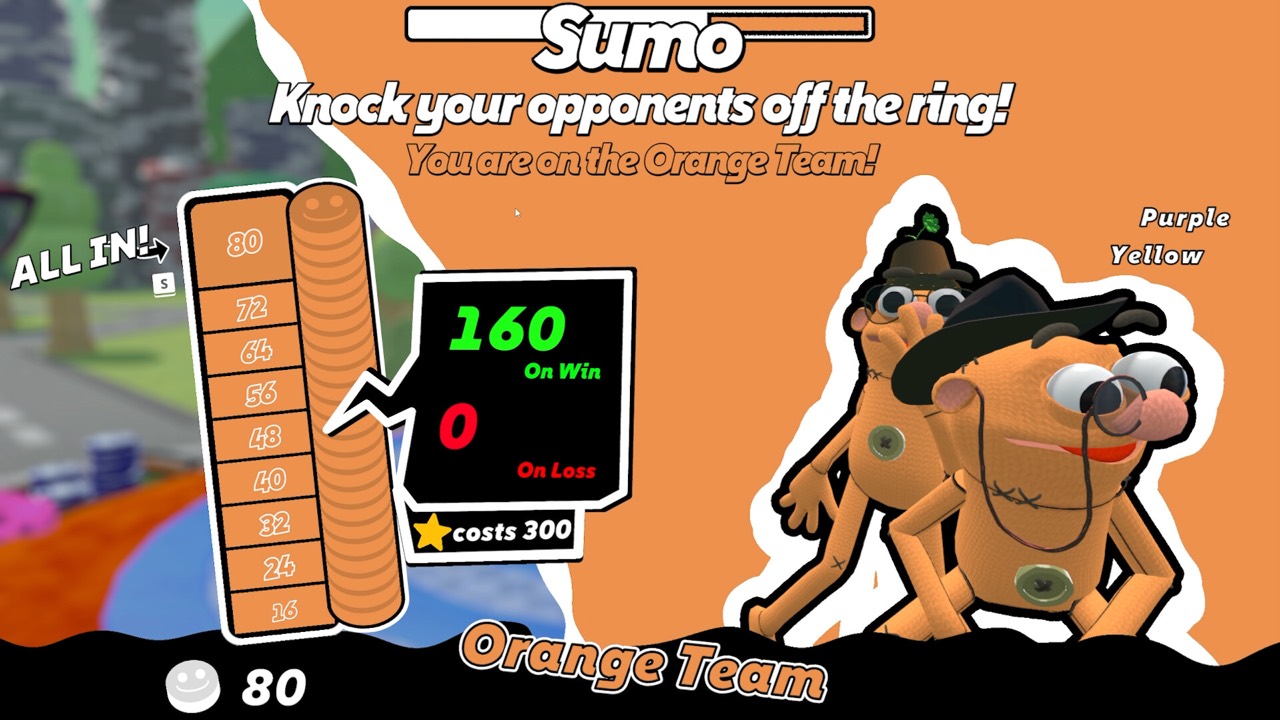
Launch coverage confirms that repeated or failed all-in wagers can lead to in-game debt. Every all-in bet sets your loss preview to zero, so one missed pick empties your balance. A run of them can stack several loans.
- Betting all in on rounds decided by chance.
- Chasing losses with bigger bets.
- Spending every chip on a star and leaving nothing for the next wager.
- Ignoring the loss preview on the wager card.
How to Avoid or Limit Debt
The publisher frames the choice as building a reserve gradually versus risking debt on a full-stack wager. Keeping a reserve is the simplest way to stay out of debt. Our betting risk guide shows how much a smaller stake protects in a recorded round.
- Check the loss preview before every bet.
- Keep chips back after buying a star.
- Bet smaller on chance rounds such as Chip Flip.
- If you already have a loan, win chips back with sensible bets rather than another all in.
Debt and the Final Podium
The release announcement describes a final podium that lists each player's stars and chips. That podium is the result after debts are paid and any stars are sold. It is the screen that decides the winner.
Because debt is settled before the podium, two players with the same star count during the match can finish in different places. The player without debt keeps their stars. The player with unpaid debt may see their count drop.
Debt During the Demo Versus Launch
The clearest numbers come from the demo. The November 5 balance update set the loan at 100 tokens below a 15-token balance and mentioned a 50-token floor after a star sale. Those values applied to the demo build.
Launch-period footage shows 100-chip deductions during repayment, matching the demo's loan size. The developer has not published the retail thresholds, though. Check the official patch notes on Steam for any changes after launch.
Climbing Out of Debt
Having a loan is not the end of your match. The loan exists to keep you playing, and winning bets still grow your chip balance. Every chip you hold at final scoring goes toward paying the debt before any stars are sold.
The goal is to rebuild a reserve without stacking another loan. Bet on rounds you can read, such as skill rounds where you know who is strong. Our how to bet on other players guide covers picking the right contestant.
Do Loans Even Matter?
Some demo players asked whether loans had any real cost. A Steam Community reply described a 100-chip deduction at final scoring. The developer's patch and recorded settlements give the stronger evidence: debt is repaid from your final total and can cost stars.
So yes, loans matter. They keep you in the game, which is good, but they are not free. Learn how stars are bought in our how to buy stars guide, so you know what each lost star cost you.
Frequently Asked Questions
What happens when you run out of chips?
An in-game loan gives you chips to keep playing. In the demo, the loan was 100 tokens when the balance dropped below 15.
When is debt repaid?
At final scoring. The end screen runs through Pay Off Debts, then Sell Stars if chips do not cover the debt.
Can debt make you lose stars?
Yes. If chips cannot cover the debt, stars are sold, which lowers your final star count.
Is the debt real money?
No. All wagers, loans and repayments use in-game currency.
How do I avoid debt?
Check the loss preview on the wager card, keep a chip reserve after buying stars and avoid repeated all-in bets.
Official Trailer
Sources and Further Reading
- Blast Furnace Games — Bugfix and Balance Update (Nov 5, 2026)
- Blast Furnace Games — WE'RE ALL IN! on Steam
- Black Lantern Collective — launch announcement (Nov 20, 2026)
- KongMNG Game Wire — WE'RE ALL IN! launch report (Nov 20, 2026)
- Steam Community — pre-release discussion of wagers and debt
- InfernoMS — WE'RE ALL IN! four-player session (YouTube, Nov 20, 2026)
- CaRtOoNz — WE'RE ALL IN! session (YouTube, Nov 12, 2026)